
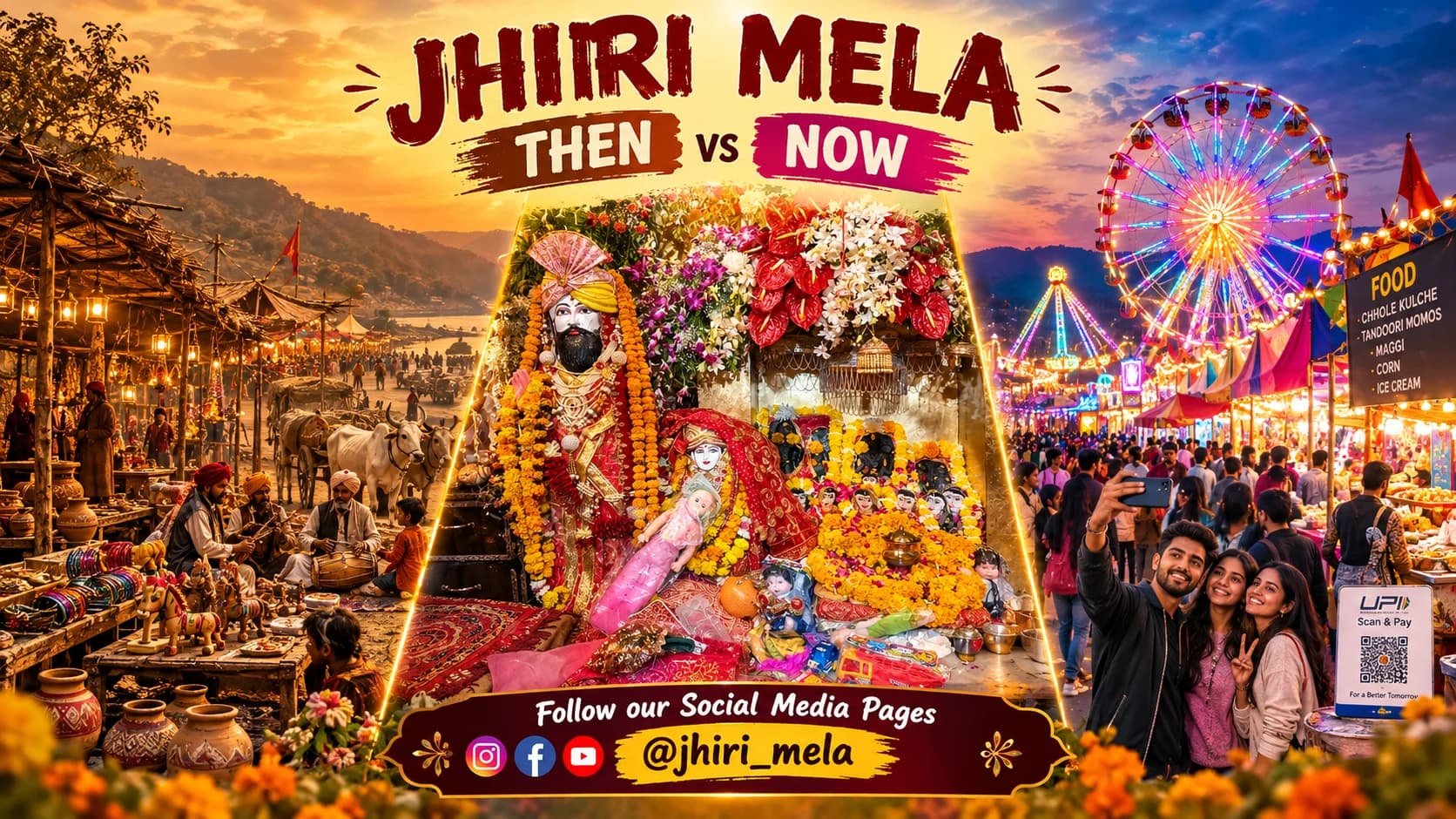
How Jhiri Mela Is Changing: Then vs. Now – A Journey from Farmers’ Fair to Festival of Faith and Fun
How Jhiri Mela Is Changing: Then vs. Now
Every autumn, the quiet village of Jhiri on the outskirts of Jammu fills with colour, music and the smell of fresh jalebis. The fair is called Jhiri Mela. It is one of the most loved fairs in Jammu region, held in memory of Baba Jitto, a farmer remembered for his courage, honesty and sacrifice.
Ask an elder about Jhiri Mela and their eyes light up. Ask a young person, and they will probably show you reels from the fair. Same fair, very different experiences. Let’s look at how the mela has changed.
The Story Behind the Mela
Baba Jitto is remembered in local folklore as a farmer who refused to give up his dignity in the face of exploitation by a powerful landlord. According to tradition, he gave his life rather than surrender what was rightfully his. His daughter, Bua Kauri, is also deeply revered, and her memory is part of the fair’s spiritual heart.
Over the generations, this story of courage and honest labour made Jhiri a pilgrimage site for farmers and families across Jammu, Punjab, Himachal and nearby regions. The fair is held around the time of Kartik Purnima (the exact dates change every year with the lunar calendar, so check local announcements before you plan a visit).
Then: The Mela of Our Grandparents
1. A farmers’ gathering first
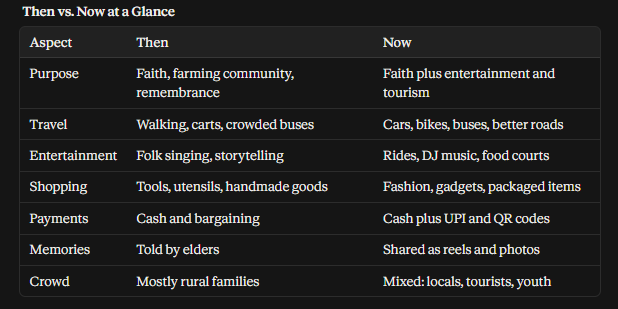
Decades ago, Jhiri Mela was closely tied to farming life. After the harvest, families travelled to the fair on foot, in bullock carts or in crowded buses. It was a time to offer thanks, meet relatives and trade.
2. Storytelling and folk music
There were no loudspeakers blasting film songs. Folk singers and bards narrated the tale of Baba Jitto, and villagers sat in circles listening late into the night.
3. Simple shopping
The stalls sold what people truly needed: farm tools, utensils, handmade toys, bangles, blankets and sweets. Money was tight, and bargaining was part of the fun.
4. Community stays
Families camped near the fair grounds. Food was shared, and strangers often became friends by the end of the mela.
5. Slow, personal, spiritual
With fewer distractions, the focus stayed on prayer, remembrance and meeting loved ones.
Now: The Mela of Today
1. Better roads, bigger crowds
Improved roads and transport mean that far more people can reach Jhiri than before. Many visitors now come for a day trip by car or bike, which makes the fair busier than ever.
2. Modern entertainment
Giant wheels, amusement rides, DJ music and food courts are now a big part of the atmosphere. Children arrive mainly for the rides, and teenagers for the selfies.
3. Digital everything
UPI payments, social media check-ins, live videos and influencer vlogs have become part of the fair. A stall owner who once dealt only in cash now shows a QR code.
4. New kinds of shopping
Alongside traditional goods you now find readymade garments, fast-fashion accessories, plastic toys, gadgets and packaged snacks. Handmade items are still there, but you have to look for them.
5. Stronger administration and safety
With crowds growing, authorities now handle traffic management, security, medical help and sanitation. This makes the fair safer, though it also changes its relaxed, informal feel.
6. A new audience
Today’s visitors include tourists, students, families on weekend outings and people who simply love fairs. Not everyone comes for the story of Baba Jitto, but many still pay their respects at the shrine.
What Has Not Changed
Despite all this, some things remain the same:
The devotion. Thousands still bow at the memorial of Baba Jitto with the same respect their ancestors showed.
The message. The story of standing up for honest labour and dignity is as relevant to today’s farmers as ever.
The joy. Children still beg for balloons, families still share meals, and the fair still ends with tired feet and happy hearts.
Challenges the Mela Faces Today
Change brings problems too:
Crowd and traffic pressure on a small village
Plastic waste left behind after the fair
Loss of folk traditions as recorded music replaces live performers
Fading focus on the Baba Jitto story among younger visitors
How We Can Keep the Spirit Alive
Support local artisans and farmers’ stalls.
Teach children the story of Baba Jitto and Bua Kauri.
Carry cloth bags and keep the grounds clean.
Encourage folk performances and storytelling sessions.
Capture the fair on camera, but also take a moment to pray and reflect.
Final Thoughts
Jhiri Mela has changed from a humble farmers’ gathering into a large festival that blends devotion, culture, commerce and entertainment. Rides have replaced bullock carts, and UPI has replaced coins, but the heart of the fair, the memory of Baba Jitto’s courage, is still beating.
If you have never been, plan a visit this year. Go early, listen to the elders, taste the local sweets and remember that you are standing in a place where a story of honesty and sacrifice is still celebrated.
Have you visited Jhiri Mela? Share your then-and-now memories in the comments below.
Planning to visit Jhiri Mela 2026?झिरी मेला 2026 दर्शन की योजना बना रहे हैं?
Explore route map, holy dip at Baba-da-Talab, and Kartik Purnima schedule.मार्ग दर्शन, बाबा-दा-तालाब स्नान और कार्तिक पूर्णिमा समय सारणी देखें।